The illustrated frame notebook
Identify the lens. Keep the driving limits.
These exact manufacturer-labelled polarized variants illustrate lens identity, not a road test, screen-compatibility test or guarantee of safer driving.
Source-linked examples, not rankings or test results. Listed sizes come from source records, never inferred from photographs. Match notes distinguish barcode verification from configuration matches.
Amazon.com / US affiliate links. We may earn from qualifying purchases. Confirm the selected model code, size and lens before ordering; no price, stock or delivery promise is made.
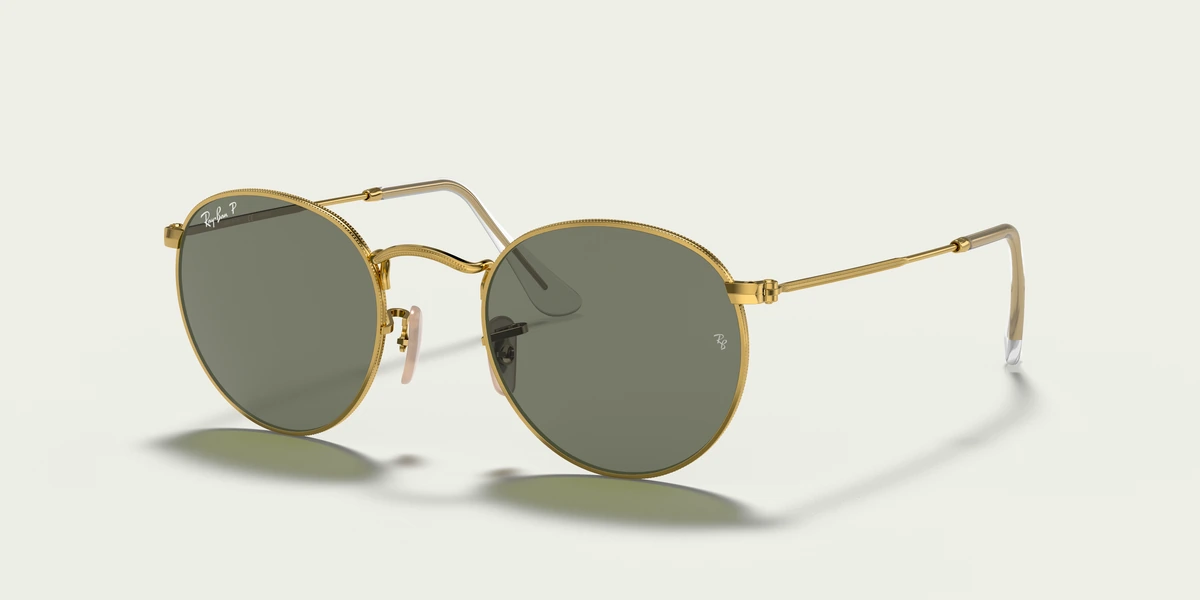
Ray-Ban
Round Metal
RB3447 001/58
Polished arista gold · G-15 green polarized
A circular metal rim keeps the outline light; its particular polarized lens must be checked by code, not by color alone.
Listed variant: 50. Variant specifications ↗ · Listing checked 8 Nov 2026.
001/58 / 50: arista gold and G-15 green polarized. Selected title and GTIN agree; unrelated generic description mentions silver/photo blue. Confirm Gold/Green Polarized and 50 mm.
View on Amazon.com (US)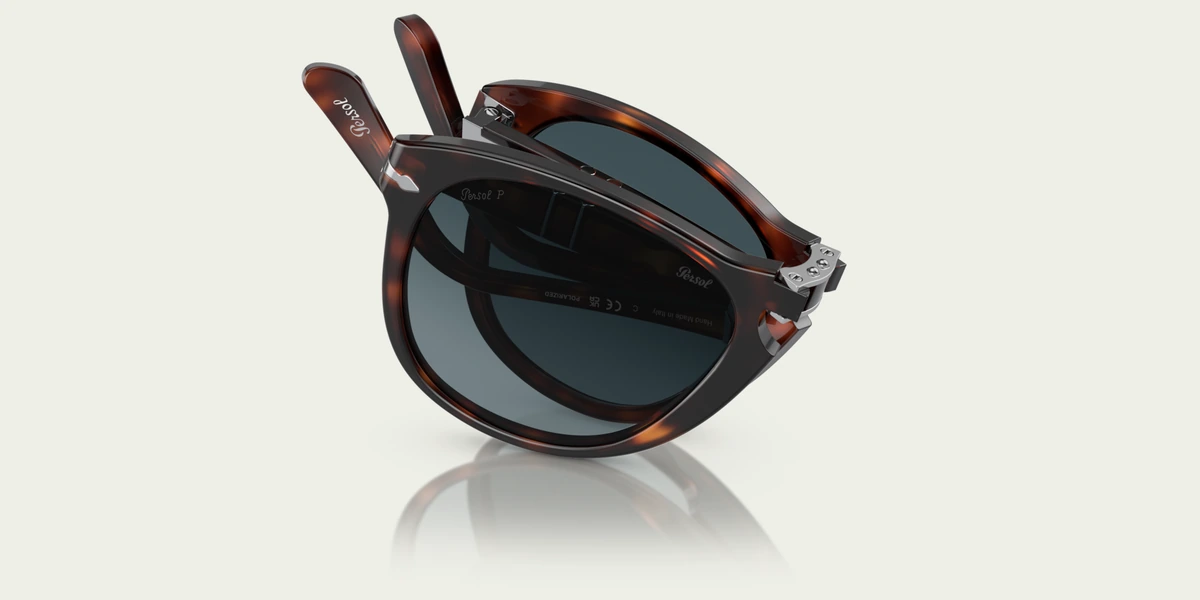
Persol
714 Original — folded view
PO0714 24/S3
Havana · Blue
Shown folded: a useful construction detail, but not a substitute for the open frame dimensions.
Listed variant: 54. Variant specifications ↗ · Listing checked 8 Nov 2026.
24/S3 / 54, Havana / blue gradient polarized; shown folded. Manufacturer UPC, Amazon UPC, MPN and title agree, but Amazon’s selected color caption incorrectly says Black/Green. Confirm 24/S3 and blue gradient polarized before ordering.
View on Amazon.com (US)Understanding Polarization
Polarized lenses use a filter to reduce reflected light from surfaces such as water or a shiny car hood. AAO also warns that they can make LCD screens, including dashboard controls, harder to read. Check the instruments you actually need to see before choosing a lens. Do not assume modern displays are universally compatible, and keep UV protection as a separate specification to verify.
Lens Colour Is Not a Driving-Safety Rating
- Grey, copper and brown describe tint appearances; a colour name alone does not establish safe use.
- Do not assume yellow or amber tinted lenses improve fog, dawn, dusk or night driving.
- AAO cautions that darkened or polarized night-driving glasses can reduce light and make seeing harder. Ask an eye-care professional about vision difficulties rather than relying on a tint claim.
Model Names from the Earlier Guide — Not a Ranking
1. Ray-Ban Polarized Aviator RB3025
The earlier article mentioned the Ray-Ban Polarized Aviator RB3025. It did not identify an exact colour/lens/size record or substantiate the stated absorption percentage. Keep those fields together when researching a listing; a model-family name alone is insufficient to verify a driving-use claim. Our separate Ray-Ban comparison shows how to record exact variants, without endorsing one for road safety.
2. Oakley Holbrook Polarized
The earlier guide also named Oakley Holbrook Polarized. No exact lens code or verified road-performance record was supplied. Do not treat a marketing term as proof of polarization, screen compatibility or improved hazard detection. Check the particular manufacturer's record and retain unknowns until confirmed.
3. Maui Jim Aviator
Maui Jim Aviator was another name in the earlier article, not a fully identified variant. We do not retain its unsupported best-in-the-world colour ranking. A useful comparison would need the exact model, size, lens identity and dated source before drawing a conclusion.
4. Costa del Mar
Costa del Mar was listed at brand level, with a glass-lens claim not tied to an exact variant. Lens material and coating claims belong to the specific product record. They cannot establish that one unspecified pair has better clarity or scratch resistance than another.
| Earlier mention | Exact variant | Driving-performance evidence |
|---|---|---|
| Ray-Ban Aviator | Not specified | Not supplied |
| Oakley Holbrook | Not specified | Not supplied |
| Maui Jim Aviator | Not specified | Not supplied |
| Costa del Mar | Not specified | Not supplied |
Maintenance & Care
Use a protective case when your sunglasses are not in use, and follow the manufacturer's cleaning and storage instructions for the exact frame and coating. Do not assume one care method works for every material. The previous article's specific heat-delamination mechanism was not independently documented here; consult the maker rather than relying on an unverified temperature or durability guarantee.
Choose the right information before choosing a product. Check the exact lens identity, the UV label and the manufacturer's intended-use restrictions; consider AAO's screen, ice and low-light cautions. This guide makes no top-overall-pick claim and offers no night-driving recommendation. If glare or night vision is a persistent problem, seek qualified eye-care advice rather than treating sunglasses as a remedy.
Sources & limits
General buying information, not medical advice, product certification or a claim of clinical review. Consult an eye-care professional for individual protection needs or symptoms.
- National Eye Institute — NEI-UV
Checked 2026-11-07. Full readable WebFetch
- American Academy of Ophthalmology — AAO-POL
Checked 2026-11-07. Indexed WebSearch excerpts; direct WebFetch 403. No block bypass.
- American Academy of Ophthalmology — AAO-UV
Checked 2026-11-07. Indexed WebSearch excerpts
- American Academy of Ophthalmology — AAO-NIGHT
Checked 2026-11-07. Indexed WebSearch excerpts