The illustrated frame notebook
A reference image is not authentication.
Exact manufacturer examples can help identify which model record to consult. Logos and a photo match alone cannot certify a delivered pair.
Source-linked examples, not rankings or test results. Listed sizes come from source records, never inferred from photographs. Match notes distinguish barcode verification from configuration matches.
Amazon.com / US affiliate links. We may earn from qualifying purchases. Confirm the selected model code, size and lens before ordering; no price, stock or delivery promise is made.
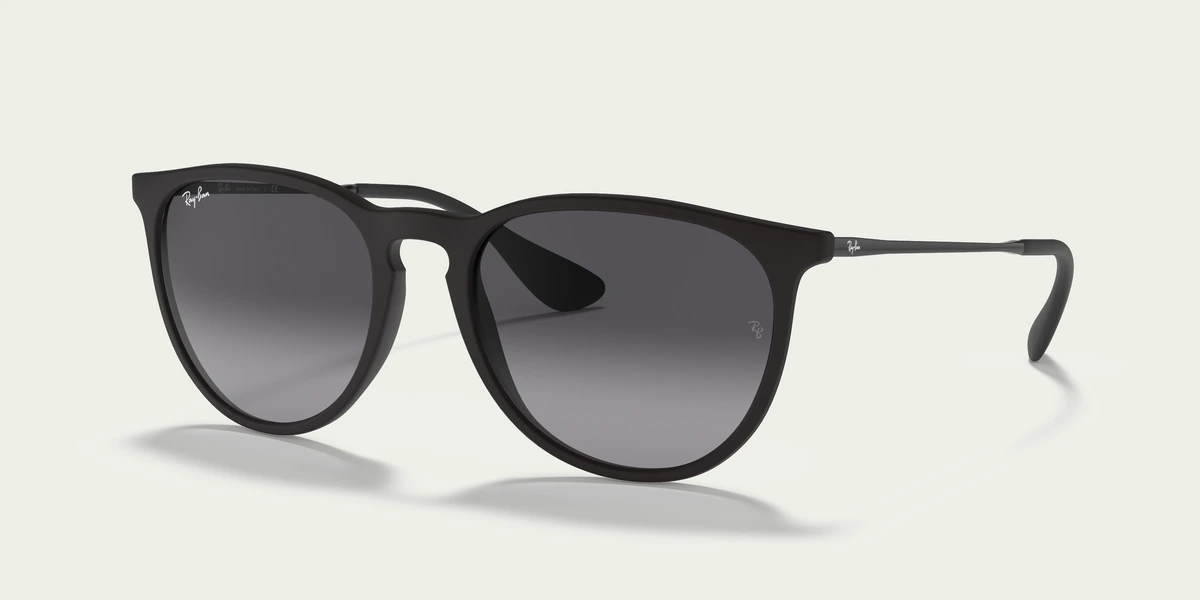
Ray-Ban
Erika Classic
RB4171 622/8G
Matte rubber black · Grey gradient, non-polarized
A softened round outline, keyhole bridge and slim metal temples offer a different visual weight from a thick square frame.
Listed variant: 54. Variant specifications ↗ · Listing checked 8 Nov 2026.
622/8G / 54, matte rubber black and grey gradient, non-polarized. Amazon’s selected model code, color and size agree; its GTIN differs from the current official page. This is a configuration match, not a barcode match.
View on Amazon.com (US)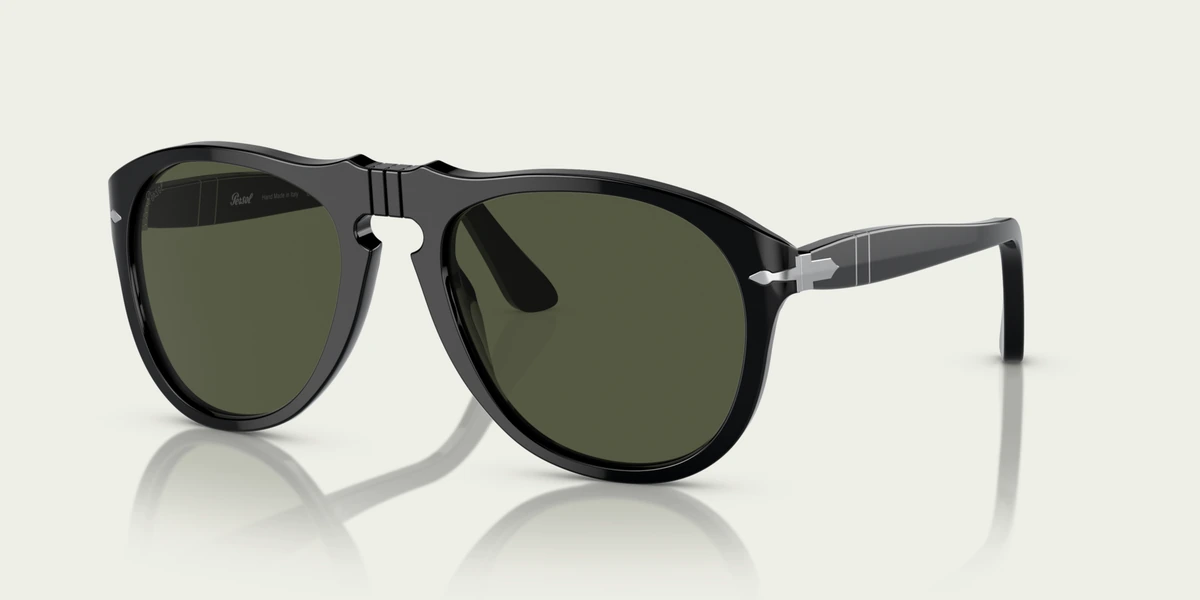
Persol
649 Original
PO0649 95/31
Black · Green
The keyhole bridge and pilot-like outline are visual details to compare separately from size.
Listed variant: 52. Variant specifications ↗ · Listing checked 8 Nov 2026.
95/31 black / green; linked care-kit bundle selected at 52 mm. The selected size control and measurements say 52, but a summary title says 53. Confirm 52 and code 95/31; the bundle UPC is not the manufacturer frame UPC.
Eyewear care-kit bundle
View US bundle on Amazon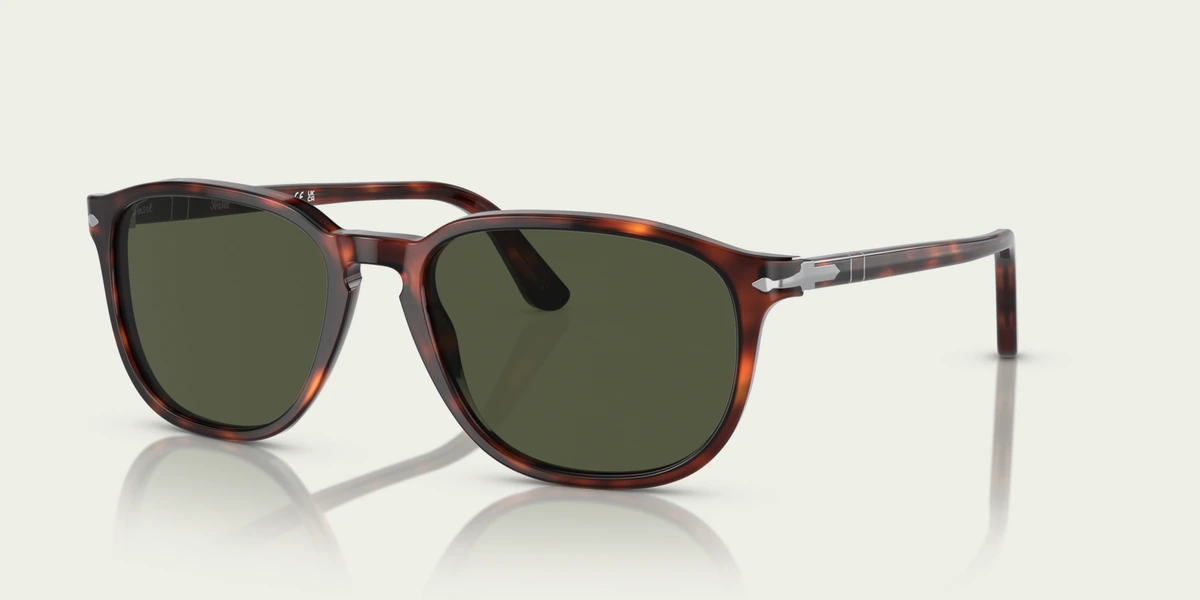
Persol
PO3019S
PO3019S 24/31
Havana · Green, non-polarized
The rounded square rim and visible arrow detail offer a useful contrast with thin metal and clear acetate.
Listed variant: 52. Variant specifications ↗ · Listing checked 8 Nov 2026.
24/31 / 52: Havana and green, non-polarized. Manufacturer size-specific SKU and Amazon UPC/MPN agree. Confirm 52 mm rather than the alternative 55 mm.
View on Amazon.com (US)Safety Claims Need Their Own Evidence
The National Eye Institute (NEI) advises checking for 99–100% UVA and UVB protection or a UV400 rating, and specifically warns not to assume expensive designer sunglasses give better UV protection. We do not claim that all counterfeits share a particular lens defect or that UV400 coating is universally required by law. If lens protection is uncertain, NEI notes that many optical shops can test UV blocking with a photometer.
Read the women’s frame guide ↗
Inspection Questions — Not Proof of Authenticity
1. Poor Hinge Quality
Inspect hinges for smooth operation, loose parts or visible damage. These observations may justify asking the seller about condition or arranging a professional inspection. They are not a universal metal-versus-plastic authenticity test: construction varies between models, and wear can affect a genuine pair too.
2. Blurry or Misaligned Logos
Compare logos and markings with the manufacturer's information for the exact model and variant. Record an inconsistency and ask for clarification rather than treating a generic etched-versus-painted rule as conclusive. A copied logo can look convincing, and a logo photograph does not establish the identity of the item you will receive.
3. Missing Authenticity Cards & Packaging
Ask what packaging and accessories are included, especially for a used or replacement item. Compare that answer with the seller's listing and the manufacturer's documentation when available. A box, case or card is supporting information, not proof of authenticity; missing packaging is not enough on its own to label a pair counterfeit.
4. Weight and Materials
Material affects weight, so a light frame should not automatically be rejected as fake. Compare only an exact model whose materials are documented, allowing for size and lens differences. Without a verified reference and measurement, satisfying weight or an indestructible feel is a subjective impression, not an authentication result.
5. Serial Numbers
Record model and size markings from the frame and compare them with the invoice, listing and maker's product record. Do not assume every printed identifier is a unique serial number or that a matching number proves authenticity. A mismatch deserves investigation; a match is only one piece of the record.
| Check | Useful question | What it cannot prove |
|---|---|---|
| Hinges | Is there visible damage or looseness? | Brand authenticity |
| Markings | Do model and size details match the record? | That copied markings are genuine |
| Packaging | What accessories does this sale include? | Authenticity from a box alone |
| Seller / price | Who sells it and what are the terms? | A genuine product from price alone |
Where to Buy Authentic
Identify the actual seller, not just the marketplace name. Check any claimed authorized-retailer status through the manufacturer's own current channel, and review that seller's returns and warranty terms before paying. This site does not certify a seller, supply an approved-retailer list or promise that one shopping channel makes every purchase 100% certain.
Keep the listing, invoice, model details and correspondence so an unresolved discrepancy can be investigated. Avoid declaring a product authentic or counterfeit from one visual clue. For safety questions, verify the lens documentation separately and consult an eye-care professional where needed. The point of this checklist is to make the next question clearer, not to replace a physical examination or a manufacturer's assessment.
Sources & limits
General buying information, not medical advice, product certification or a claim of clinical review. Consult an eye-care professional for individual protection needs or symptoms.
- National Eye Institute — NEI-UV
Checked 2026-11-07. Full readable WebFetch
- American Academy of Ophthalmology — AAO-POL
Checked 2026-11-07. Indexed WebSearch excerpts; direct WebFetch 403. No block bypass.
- American Academy of Ophthalmology — AAO-UV
Checked 2026-11-07. Indexed WebSearch excerpts
- American Academy of Ophthalmology — AAO-NIGHT
Checked 2026-11-07. Indexed WebSearch excerpts