The illustrated frame notebook
Visual weight can change without a fit claim.
A transparent round frame, a defined brow and a fine metal rim give different lines to compare. Use your reference-pair dimensions separately.
Source-linked examples, not rankings or test results. Listed sizes come from source records, never inferred from photographs. Match notes distinguish barcode verification from configuration matches.
Amazon.com / US affiliate links. We may earn from qualifying purchases. Confirm the selected model code, size and lens before ordering; no price, stock or delivery promise is made.
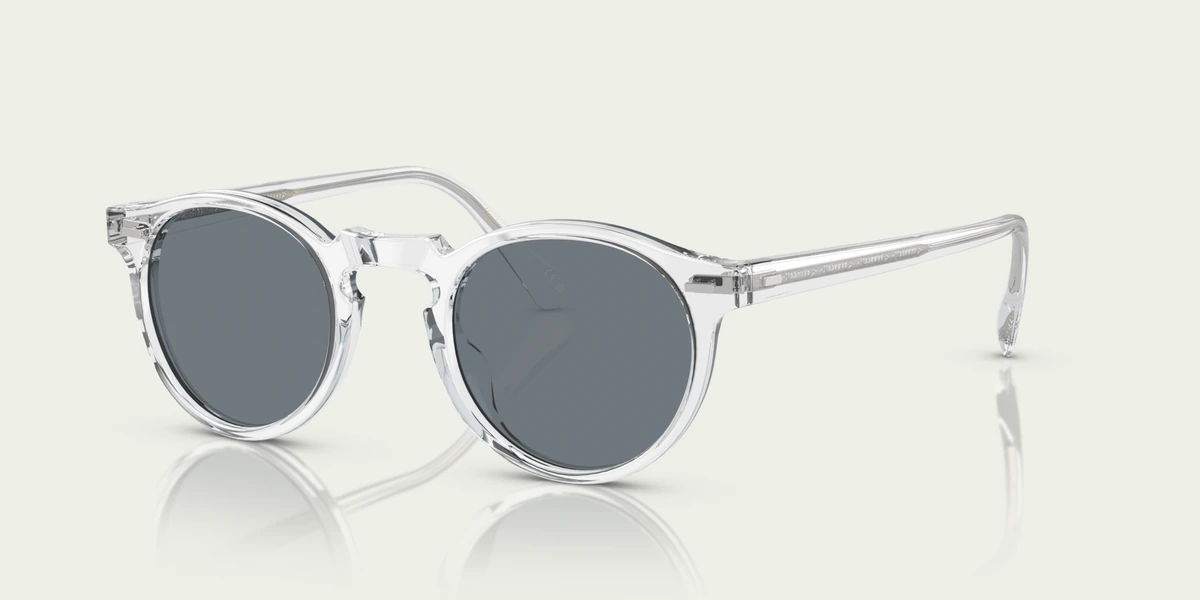
Oliver Peoples
Gregory Peck Sun
OV5217S 1101R8
Crystal · Blue Photochromic
Transparent material changes the visual weight of a rounded outline; it does not establish comfort.
Listed variant: 47. Variant specifications ↗ · Listing checked 8 Nov 2026.
1101R8 / 47: crystal with blue photochromic lenses (Amazon calls the color indigo). The exact UPC matches the manufacturer’s 47-23 variant, not its separate 50-23 variant.
View on Amazon.com (US)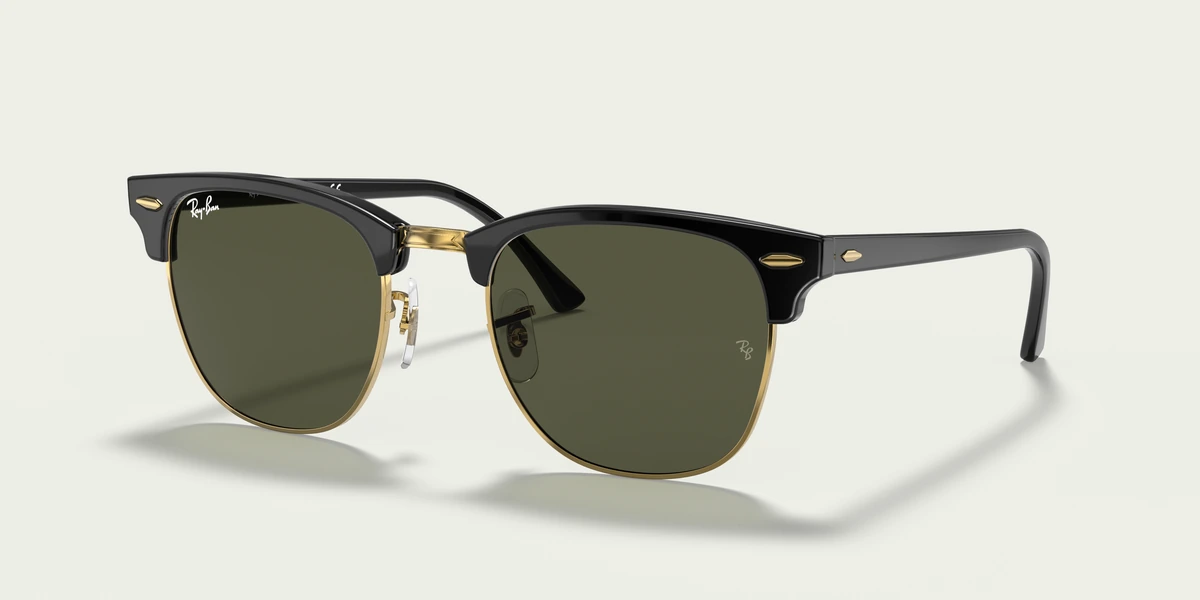
Ray-Ban
Clubmaster Classic
RB3016 W0365
Polished black on gold · G-15 green
A dark upper brow and fine lower rim divide the outline into two visual weights.
Listed variant: 51. Variant specifications ↗ · Listing checked 8 Nov 2026.
W0365 / 51, black-on-gold with G-15 green, is the non-polarized manufacturer variant. The linked care-kit bundle repeats that code and UPC but Amazon’s generic polarization table conflicts. Confirm W0365, not a polarized option.
Eyewear care-kit bundle
View US bundle on Amazon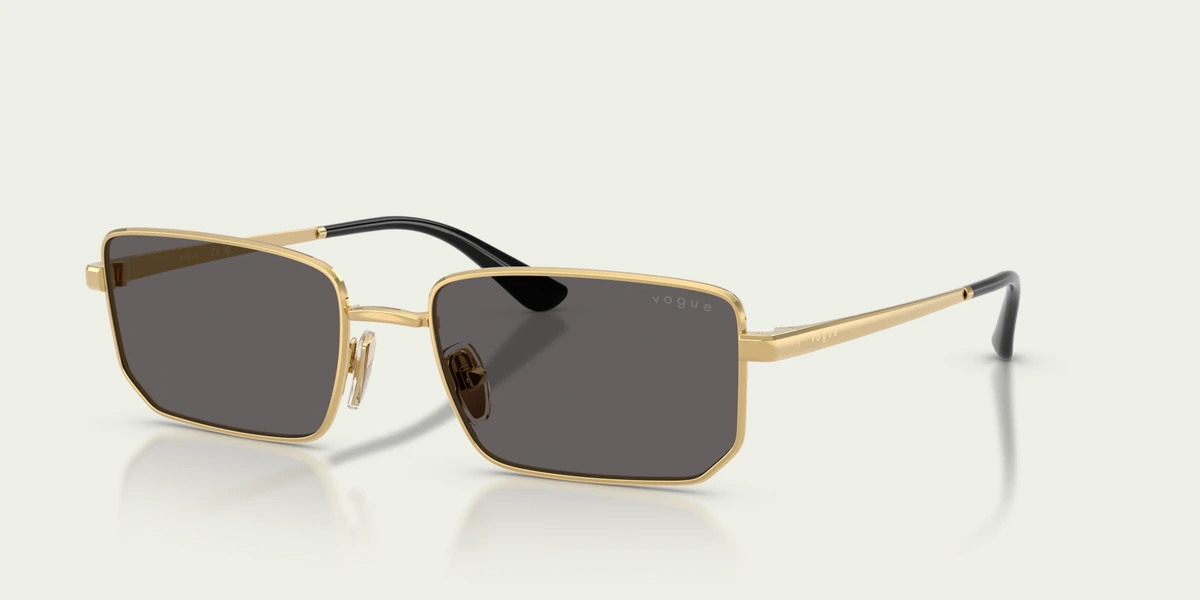
Vogue Eyewear
VO4352S
VO4352S 280/87
Gold metal · Black smoke, non-polarized
The slender rectangular metal outline and separate nose pads place visual emphasis on the lens rather than a thick rim.
Listed variant: 56. Variant specifications ↗ · Listing checked 8 Nov 2026.
280/87 / 56: gold metal with black smoke lenses, non-polarized. Amazon’s model, selected color and size match the official variant; no UPC appears in the readable listing. This is not the earlier polarized VO4362S.
View on Amazon.com (US)How to Determine Your Face Shape
Stand in front of a mirror with your hair pulled back. Measure the width of your forehead, cheekbones, and jawline, as well as the length of your face from hairline to chin. Compare these measurements. If your face is longer than it is wide, you might be oval or oblong. If the width and length are roughly equal, look at your jawline—is it soft (round) or angular (square)?
Sunglasses to Try with an Oval Outline
Oval faces are often described as having balanced proportions. If that label seems useful to you, compare oversized frames, aviators and simpler shapes to see how much emphasis you prefer. Look at the frame width relative to your face, but do not treat any one style as universally flattering or forbid yourself a shape you like.
Read the women’s frame guide ↗
Sunglasses to Try with a Round Outline
For a round outline, angular frames can offer visual contrast to soft curves. Compare squares, rectangular Wayfarer-style shapes and geometric outlines if that contrast appeals. Small round glasses are another option, not a mistake to avoid: there is no objectively correct way to make a face look fuller or sharper.
Sunglasses to Try with a Square Outline
Square faces are often described by a strong jawline and broad forehead. Round glasses, oval shapes and pilot-style aviators provide curved outlines to compare; rimless frames offer less visual emphasis. Treat softening the look as an optional styling preference rather than a change that every face needs.
Sunglasses to Try with a Heart-Shaped Outline
Heart-shaped faces are described as wider at the forehead and tapering towards the chin. Aviators, cat-eyes and bottom-emphasised outlines are possibilities if you like how their shapes relate to yours. The outline is not enough to determine the correct bridge, size or comfort of an exact frame.
Diamond & Oblong Faces
Diamond faces are described by wider cheekbones with a narrower forehead and chin; oval or rimless styles are options to try. Oblong describes a longer outline, where you may like taller or oversized-looking frames. These descriptions can overlap. They are a vocabulary for experimenting, not a set of ideal measurements.
Frame Styles Explained
Understanding frame vocabulary helps you compare looks. Aviators suggest a pilot-inspired outline; Wayfarer-style frames offer angular lines; cat-eyes add a retro upward sweep; shields use a broad continuous-lens appearance. A style name does not establish coverage, impact protection or suitability for a particular activity.
Sizing & Fit Mistakes to Avoid
Don't ignore the numbers on the inside arm of the sunglasses. Lens width, bridge width and temple length give you a reference for comparison. Compare them with a pair you already find comfortable, while checking the way a new frame actually sits. Face size, shape, bridge design and adjustment all matter; identical numbers do not guarantee identical comfort.
- Do: Measure your current favorite pair for reference.
- Don't: Ignore how the bridge actually feels and sits.
- Do: Try frame colours against your usual wardrobe.
- Don't: Infer UV protection from style, price or a designer label; check the exact specification.
Remember, these are just guidelines. The most important rule is that you feel confident and comfortable. Don't be afraid to experiment with different styles until you find the one that feels like 'you'.
Sources & limits
General buying information, not medical advice, product certification or a claim of clinical review. Consult an eye-care professional for individual protection needs or symptoms.
- National Eye Institute — NEI-UV
Checked 2026-11-07. Full readable WebFetch
- American Academy of Ophthalmology — AAO-POL
Checked 2026-11-07. Indexed WebSearch excerpts; direct WebFetch 403. No block bypass.
- American Academy of Ophthalmology — AAO-UV
Checked 2026-11-07. Indexed WebSearch excerpts
- American Academy of Ophthalmology — AAO-NIGHT
Checked 2026-11-07. Indexed WebSearch excerpts