The illustrated frame notebook
Appearance does not prove protection.
These polarized and non-polarized examples illustrate different lens labels. A photograph cannot establish UV transmission; follow the source limits below.
Source-linked examples, not rankings or test results. Listed sizes come from source records, never inferred from photographs. Match notes distinguish barcode verification from configuration matches.
Amazon.com / US affiliate links. We may earn from qualifying purchases. Confirm the selected model code, size and lens before ordering; no price, stock or delivery promise is made.
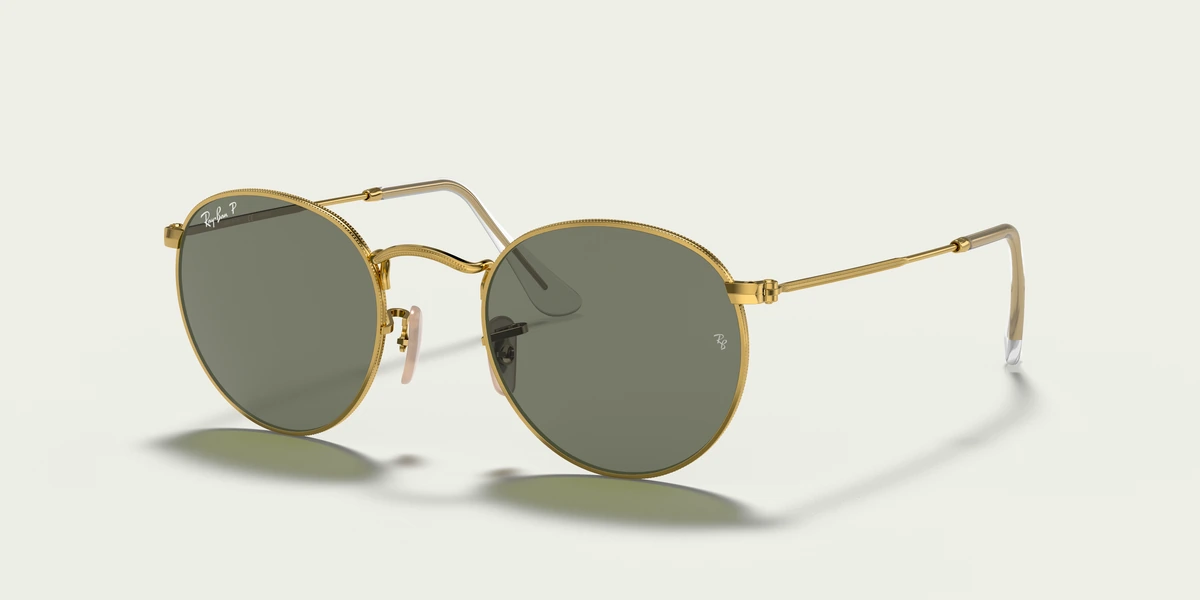
Ray-Ban
Round Metal
RB3447 001/58
Polished arista gold · G-15 green polarized
A circular metal rim keeps the outline light; its particular polarized lens must be checked by code, not by color alone.
Listed variant: 50. Variant specifications ↗ · Listing checked 8 Nov 2026.
001/58 / 50: arista gold and G-15 green polarized. Selected title and GTIN agree; unrelated generic description mentions silver/photo blue. Confirm Gold/Green Polarized and 50 mm.
View on Amazon.com (US)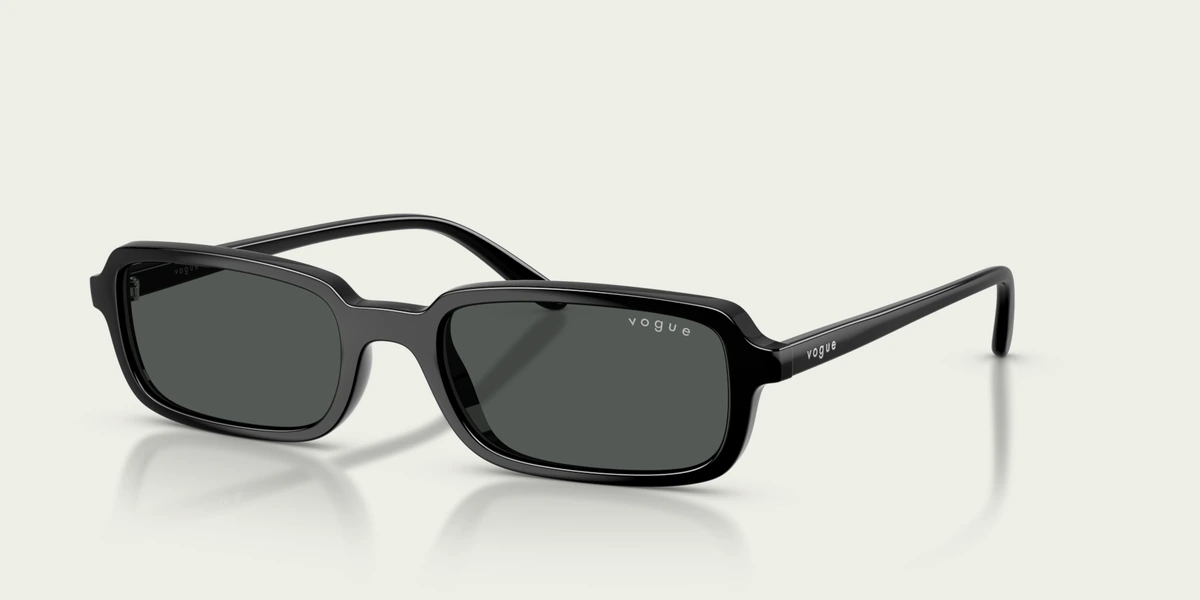
Vogue Eyewear
VO5666S
VO5666S W44/87
Black · Dark grey, non-polarized
A low pillow-shaped outline uses a broad black rim without the upturned corners of a cat-eye.
Listed variant: 53. Variant specifications ↗ · Listing checked 8 Nov 2026.
W44/87 / 53: black and dark grey, non-polarized. Amazon’s model, selected color and size match the official variant; no UPC appears in the readable listing, so a barcode match is not claimed.
View on Amazon.com (US)The Difference Between UV Protection and Polarized Lenses
NEI explains that ultraviolet light is invisible and advises looking for lenses labelled 99–100% UVA and UVB protection or UV400. AAO describes polarization as filtering reflected glare and states that polarization itself does not provide UV protection. A pair may have both features, but each must be confirmed for the exact lens rather than inferred from the other.
What UV400 Protection Means
NEI recommends looking for 99–100% UVA and UVB protection or a UV400 rating. AAO also accepts a label saying UV absorption up to 400 nm. Check that specific claim rather than relying on lens darkness, the word designer or a logo. This is label-reading guidance from those sources, not a legal claim that every sunglass lens must carry a particular coating or mark.
When Polarized Lenses Are Most Useful
AAO describes polarized lenses as useful for reflected glare around water and other bright surfaces. That is not a universal safety recommendation for every drive or snow activity. AAO also highlights situations where reducing glare can be inconvenient, including spotting ice. Choose according to the actual task and manufacturer guidance, and ask an eye-care professional when the visual requirements are uncertain.
Read the polarized lens guide ↗
When Polarized Lenses May Be Inconvenient
The polarization filter can make LCD screens harder to read, including some dashboard controls, phones, watches and ATMs, according to AAO. Check the displays you need to use rather than assuming compatibility. AAO also cautions about spotting ice and night driving. This guide does not provide aviation or other occupational approval for any lens.
Lens Materials Explained
| Material name | Record to obtain | Do not infer from the name alone |
|---|---|---|
| Glass | Exact lens/coating specification | Scratch or breakage guarantee |
| Polycarbonate | Exact lens and relevant use guidance | Certified impact protection |
| CR-39 plastic | Exact manufacturer lens record | A universal clarity/weight ranking |
| Trivex | Exact manufacturer lens record | Approval for every activity |
How to Verify Real Protection
Read the exact product's UV and polarization specifications separately. NEI notes that many optical shops have a photometer for testing UV blocking when a claim is uncertain. This site does not certify lenses, treat a CE mark as an authenticity test or use a screen-tilt demonstration as proof of UV protection. Brand identity and a dark tint are not substitutes for documentation.
Caring for Your Lenses
Follow the manufacturer's care instructions for the exact lens and coating, and keep a protective case available. After use around sand or salt water, check those instructions before wiping or applying a cleaning product. We do not apply one care recipe or an unverified heat-delamination claim to every material.
Separate the decisions: verify the UV label, then decide whether polarization suits the task and the screens you need to see. A higher price does not by itself establish better UV protection, as NEI points out. No particular variant in our comparison is medically recommended here. Consult an eye-care professional about protection needs or vision symptoms rather than relying on a shopping guide.
Sources & limits
General buying information, not medical advice, product certification or a claim of clinical review. Consult an eye-care professional for individual protection needs or symptoms.
- National Eye Institute — NEI-UV
Checked 2026-11-07. Full readable WebFetch
- American Academy of Ophthalmology — AAO-POL
Checked 2026-11-07. Indexed WebSearch excerpts; direct WebFetch 403. No block bypass.
- American Academy of Ophthalmology — AAO-UV
Checked 2026-11-07. Indexed WebSearch excerpts
- American Academy of Ophthalmology — AAO-NIGHT
Checked 2026-11-07. Indexed WebSearch excerpts