Shapes and details
Choose two outlines to try.
Look at the lens border and upper corners. Keep the size comparison separate from the styling comparison.
As an Amazon Associate, we earn from qualifying purchases. Check the selected model, size and lens before ordering.
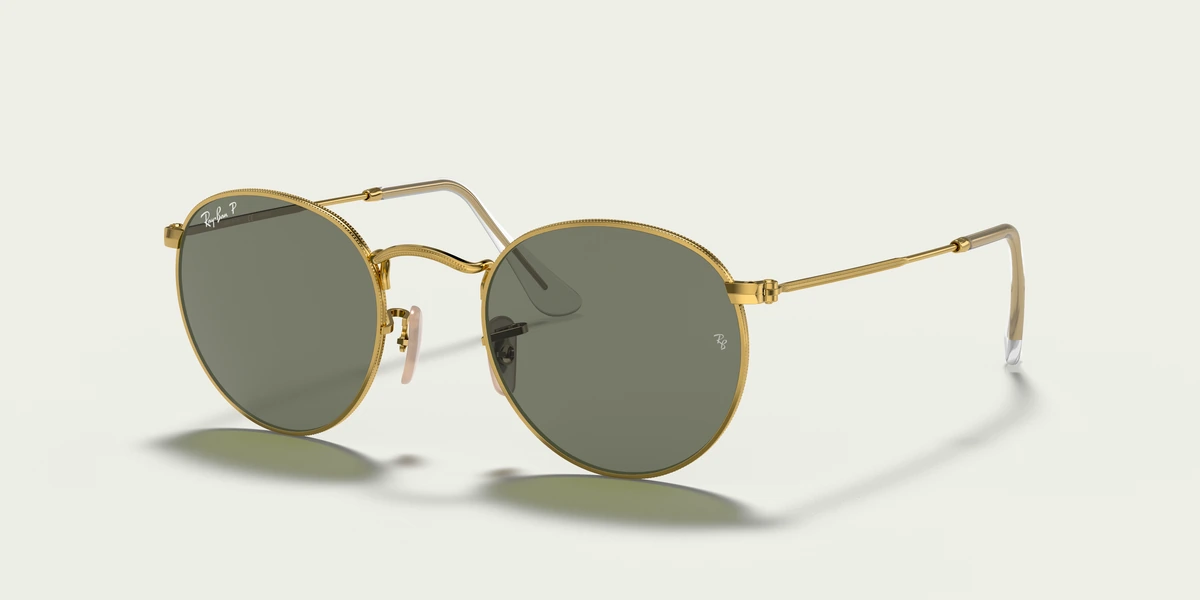
Ray-Ban
Round Metal
RB3447 001/58
Polished arista gold · G-15 green polarized
A circular gold rim keeps a fine border around the green lenses. Try it beside an angular rim to compare the outline.
Selected size 50 mm. Manufacturer variant · Listing checked 8 Nov 2026.
Confirm 001/58, 50 mm and Gold/Green Polarized. Generic copy describes a different silver and blue option.
Listing details to confirm
001/58 / 50: arista gold and G-15 green polarized. Selected title and GTIN agree; unrelated generic description mentions silver/photo blue. Confirm Gold/Green Polarized and 50 mm.
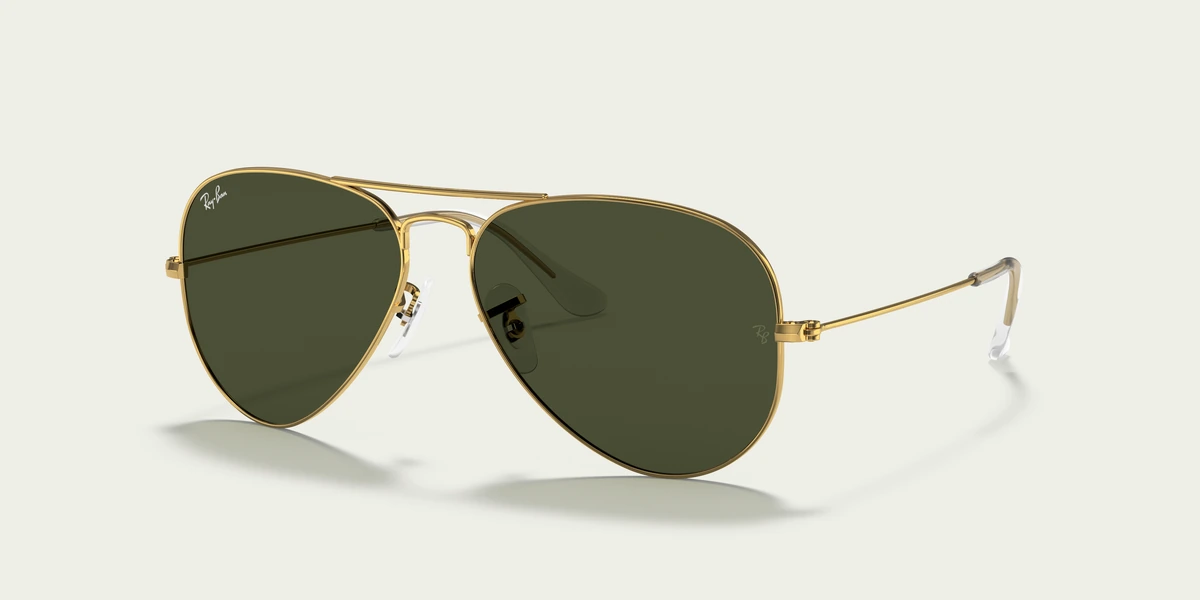
Ray-Ban
Aviator Classic
RB3025 L0205
Polished arista gold · G-15 green
A fine gold rim and open double bridge surround a teardrop lens. Compare that low outer curve with a straighter rectangular outline.
Selected size 58 mm. Manufacturer variant · Listing checked 8 Nov 2026.
Confirm L0205, 58 mm, gold and G-15 green non-polarized lenses. Amazon's generic model field says 50 mm and its UPC differs.
Listing details to confirm
Selected Shiny Gold/G-15 Green, non-polarized, 58 mm matches the pictured configuration. Amazon's UPC differs and its generic MPN says 50 mm: confirm RB3025 L0205 / 58, not that generic field.
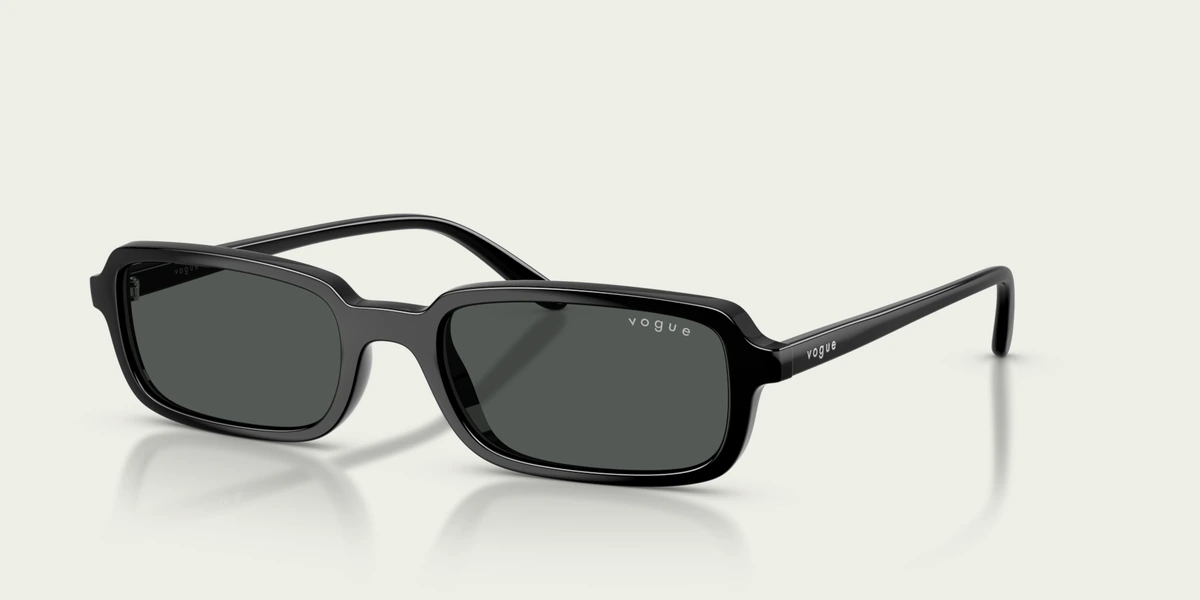
Vogue Eyewear
VO5666S
VO5666S W44/87
Black · Dark grey, non-polarized
The low rounded rectangular rim has a broad black border. Its corners stay lower than a pronounced cat-eye.
Selected size 53 mm. Manufacturer variant · Listing checked 8 Nov 2026.
Confirm VO5666S W44/87, 53 mm and Black/Dark Grey, non-polarized. Amazon does not show a UPC, so this is a selected-configuration match.
Listing details to confirm
W44/87 / 53: black and dark grey, non-polarized. Amazon's model, selected color and size match the official variant; no UPC appears in the readable listing, so a barcode match is not claimed.
Keep one thing familiar
Start with a size close to your usual pair when you can. If you change the outline, rim thickness and size all at once, it is harder to tell which difference you like. The goal is a comparison you can repeat, not a verdict about which shape you should wear.
Choose a contrast you can see
- Round and rectangular rims make an obvious outline contrast.
- A browline has more weight along the top than a fine metal rim.
- A cat-eye corner turns upward where a low pillow-shaped rim stays more horizontal.
- Clear acetate and opaque black can look different even with a similar outline.
Use the same view for each pair
If photos help you decide, use the same distance, camera height and lighting for both pairs. Take a front view and a side view. Notice whether the top rim follows your eyebrows, how far the lower rim sits from your cheeks, and whether the side arms look straight or press outward. Treat the photos as a record of the try-on, not measurements of the frame.
Check contact points while you wear them
Smile, look down and turn your head. Notice slipping at the bridge, pressure beside your head or contact with your cheeks. These observations help you describe a problem to an optician or retailer. They do not identify the correct replacement size by themselves.
Write down the arm numbers
Record the lens, bridge and temple markings from your comfortable pair. Compare those numbers with the new frame before ordering. In the Wayfarer comparison, the supported bridge and temple measurements differ even though the names look similar. A matching lens number alone is not enough to predict comfort.
Choose the next thing to try
If you prefer the shape but the bridge slips, keep the outline and ask about a different bridge construction or size. If the fit feels familiar but the rim is too prominent, compare a finer rim without changing the other details. Keep the photo and the model code together so you can find the same variant again.