Shapes and details
See how the details change the outline.
Compare fine metal, clear acetate, a low black rim and a continuous shield.
As an Amazon Associate, we earn from qualifying purchases. Check the selected model, size and lens before ordering.
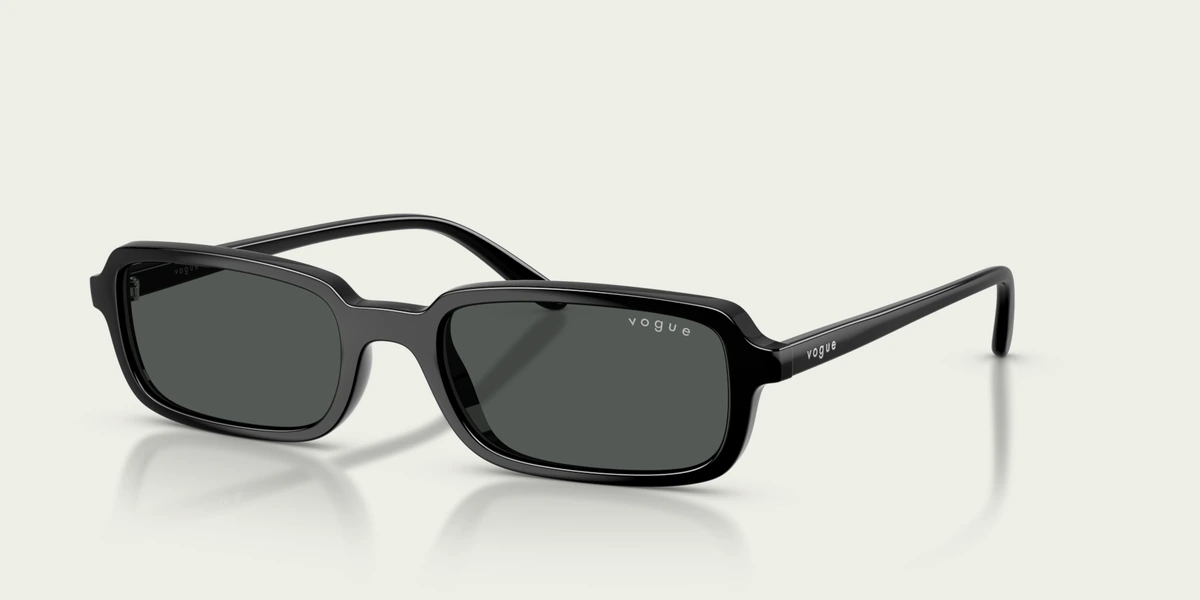
Vogue Eyewear
VO5666S
VO5666S W44/87
Black · Dark grey, non-polarized
The low rounded rectangular rim has a broad black border. Its corners stay lower than a pronounced cat-eye.
Selected size 53 mm. Manufacturer variant · Listing checked 8 Nov 2026.
Confirm VO5666S W44/87, 53 mm and Black/Dark Grey, non-polarized. Amazon does not show a UPC, so this is a selected-configuration match.
Listing details to confirm
W44/87 / 53: black and dark grey, non-polarized. Amazon's model, selected color and size match the official variant; no UPC appears in the readable listing, so a barcode match is not claimed.
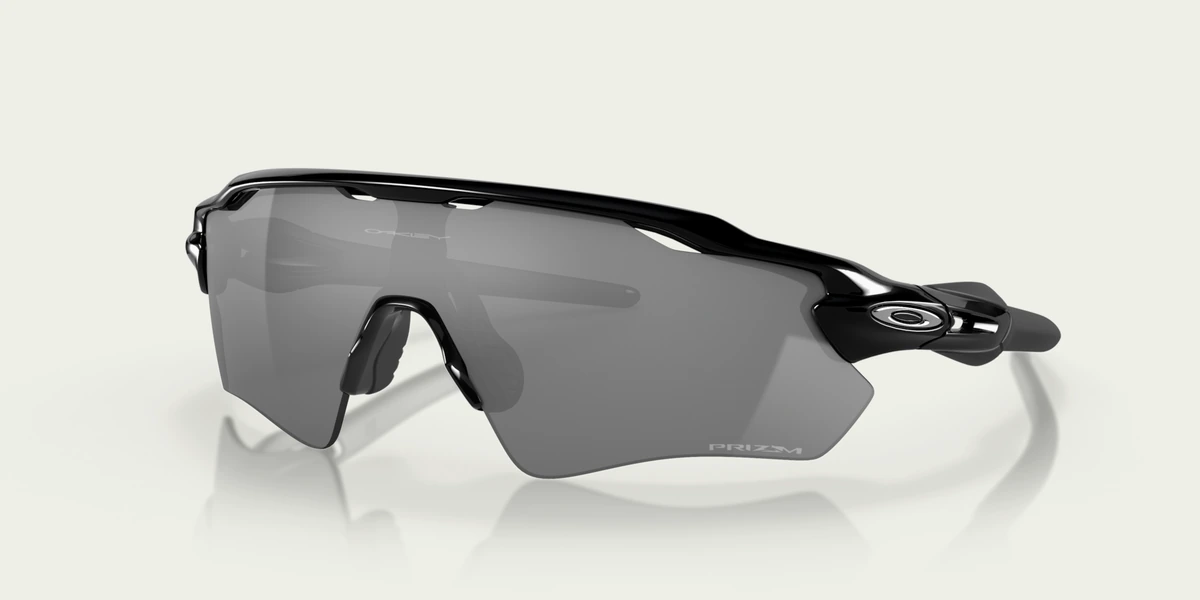
Oakley
Radar EV Path
OO9208 920852
Polished black · Prizm Black
The continuous shield extends across the front. Compare its construction with two separate lenses rather than treating its size label as an ordinary lens width.
Selected size 38 shield listing label. Manufacturer variant · Listing checked 8 Nov 2026.
Confirm 920852, polished black and non-polarized Prizm Black. The 38 mm listing label describes this shield, not an ordinary separate lens width.
Listing details to confirm
920852: polished black / Prizm Black, non-polarized. Amazon calls this shield size 38 mm; that is its listing label, not an ordinary individual-lens width or a fit diagnosis. Generic arm measurements conflict and are not reused.
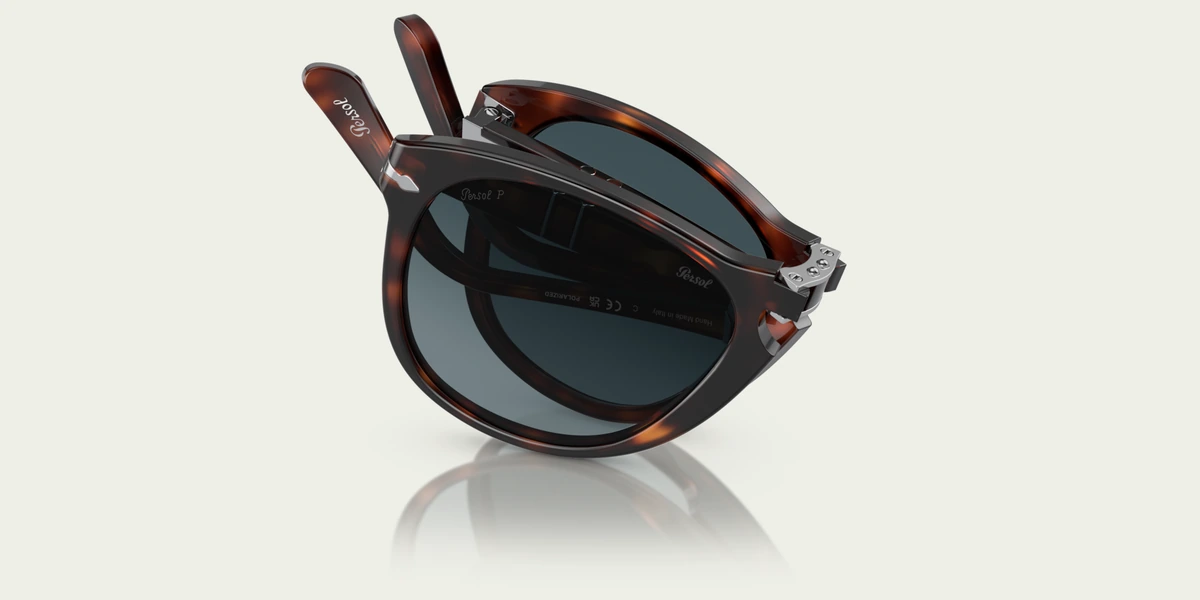
Persol
714 Original, folded view
PO0714 24/S3
Havana · Blue
Shown folded, with Havana frames and blue gradient polarized lenses. Use the model and selected size rather than estimating worn width from this view.
Selected size 54 mm. Manufacturer variant · Listing checked 8 Nov 2026.
Confirm 24/S3, 54 mm, Havana and blue gradient polarized. Amazon's color caption says Black/Green despite the matching title, UPC and model code.
Listing details to confirm
24/S3 / 54, Havana / blue gradient polarized; shown folded. Manufacturer UPC, Amazon UPC, MPN and title agree, but Amazon's selected color caption incorrectly says Black/Green. Confirm 24/S3 and blue gradient polarized before ordering.
1. A taller frame
A taller lens takes up more vertical space. Look at where the lower rim sits when you smile and where the top line meets your eyebrows. The word oversized does not tell you the bridge size.
2. A continuous shield
A shield joins the lens area across the front instead of outlining two separate lenses. Compare the Radar EV Path with a conventional frame to see how much of that continuous shape you want. Its appearance does not establish impact protection.
3. Geometric corners
A hexagonal or other angular rim introduces corners that a circular lens does not have. Compare one with your current frame at the same camera angle. You can like the corners without treating them as a rule for a round face.
4. A colored lens
Yellow, brown, green and blue change how a pair looks. Color alone does not establish UV protection or suitability for driving in low light. Check the exact lens description before treating a color as a practical benefit.
5. A teardrop aviator
An aviator lens narrows toward the bridge and curves lower at the outside. The pictured Ray-Ban L0205 combines that outline with a fine gold rim and open double bridge. Try it against a thick square rim to compare the border, not just the color.
6. An upswept corner
A pronounced cat-eye points upward at the outside. Compare that top line with a lower rectangular rim. The corner changes the frame outline, not the shape of your face.
7. A pastel or bright frame
A pale lilac frame and an opaque dark frame can have similar outlines but very different contrast against your skin and hair. Try each with clothing you actually wear. A finish name does not establish a material or a sustainability claim.
8. A detachable chain
A chain adds a visible line below and behind the frame. Check that its attachment suits the temples and follow the maker's instructions. Try the frame without the chain too, so you can judge which change you prefer.
9. Rimless or decorated edges
Rimless tinted lenses leave less visible frame around the eyes. Rhinestone details do the opposite by drawing attention to the edge. If you like a Y2K-inspired look, decide which of those details you actually want rather than buying by the era label.
10. Transparent acetate
Clear or champagne-toned acetate lets more of your face show through the rim. The crystal Gregory Peck frame illustrates the difference from opaque black. Its blue photochromic lens is a separate part of that particular variant.
| Keep familiar | Try a contrast | Check separately |
|---|---|---|
| Frame size | Fine metal instead of a thick rim | Bridge and temple contact |
| Frame outline | Transparent instead of opaque | Exact material |
| Frame construction | Different lens color | UV and polarization labels |
Lens guidance
- National Eye Institute, UV protection labels
Checked 2026-11-07.